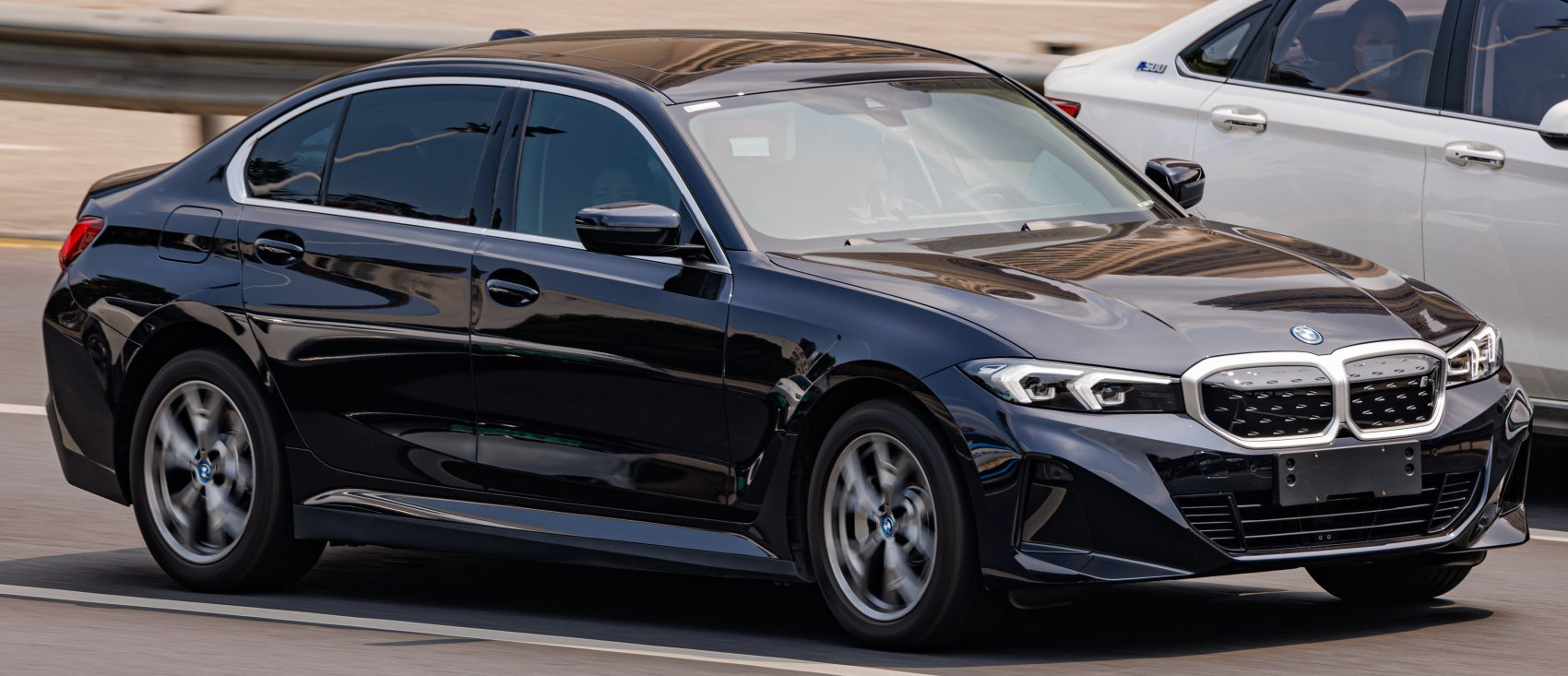
Bmw 79.1 kWh (340 Hp) eDrive40L
⚡ Electric Vehicle
General information
| All-electric range (CLTC) | 592 km |
|---|---|
| Electric motor power | 340 Hp |
| Electric motor torque | 430 Nm |
| Gross battery capacity | 79.1 kWh |
| Brand |
BMW
|
|---|---|
| Model |
i3
|
| Generation |
i3 (G28)
|
| Modification (Engine) |
79.1 kWh (340 Hp) eDrive40L
|
| Start of production |
February, 2023 year
|
| Powertrain Architecture |
BEV (Electric Vehicle)
Powertrain architecture classifies the propulsion technology of the vehicle, such as internal combustion, electric (BEV), or hybrid.
|
| Body type |
Sedan
Body type refers to the structural design and shape of the vehicle (such as Sedan, Hatchback, SUV, or Coupe).
|
| Seats |
5
Seat count specifies the maximum passenger capacity the vehicle is legally approved to transport at once.
|
| Doors |
4
Door count indicates the total number of entry points for passengers and cargo access (e.g., 3-door, 5-door).
|
FAQ
Performance specs
| Fuel Type |
Electricity
Fuel type defines the primary source of energy required by the vehicle’s engine (petrol, diesel, electricity, hybrid, LPG, etc.).
|
|---|---|
| Acceleration 0 - 100 km/h |
5.6 sec
The 0-100 km/h sprint time measures how quickly the vehicle accelerates from a standstill. It is a key indicator of raw performance and responsiveness.
|
| Acceleration 0 - 62 mph |
5.6 sec
The 0-100 km/h sprint time measures how quickly the vehicle accelerates from a standstill. It is a key indicator of raw performance and responsiveness.
|
| Acceleration 0 - 60 mph (Calculated by User) |
5.3 sec
|
| Maximum speed |
180 km/h
Maximum speed represents the upper limit of velocity the vehicle can reach, limited by gear ratios, engine power, and aerodynamic resistance.
|
| Weight-to-power ratio |
6.1 kg/Hp, 162.9 Hp/tonne
|
| Weight-to-torque ratio |
4.9 kg/Nm, 206 Nm/tonne
|
Electric cars and hybrids specs
| Gross battery capacity |
79.1 kWh
Battery capacity measures the total amount of energy stored in the battery pack. A larger capacity typically enables a longer driving range.
|
|---|---|
| Battery technology |
Lithium nickel manganese cobalt oxides (Li-NMC)
|
| Battery location |
Below the floor
|
| All-electric range (CLTC) |
592 km
All-electric range represents the maximum distance the vehicle can cover on a single full charge using purely electric energy.
|
| Average energy consumption (CLTC) |
14.1 kWh/100 km
|
| Electric motor power |
340 Hp
|
| Electric motor torque |
430 Nm
Torque represents the engine’s rotational force, which determines pulling power. High torque ensures responsive acceleration and stronger uphill performance.
|
| Electric motor location |
Rear axle, Transverse
|
| Electric motor type |
Synchronous
|
| System power |
340 Hp
|
| System torque |
430 Nm
Torque represents the engine’s rotational force, which determines pulling power. High torque ensures responsive acceleration and stronger uphill performance.
|
Space, Volume and weights
| Kerb Weight |
2087 kg
Curb weight is a key parameter affecting fuel consumption, handling agility, acceleration times, and stopping distances.
|
|---|---|
| Max. weight |
2580 kg
Curb weight is a key parameter affecting fuel consumption, handling agility, acceleration times, and stopping distances.
|
| Max. load |
493 kg
|
| Trunk (boot) space - minimum |
410 l
|
Dimensions
| Length |
4872 mm
|
|---|---|
| Width |
1846 mm
|
| Height |
1481 mm
|
| Wheelbase |
2966 mm
|
| Front track |
1593 mm
|
| Rear / Back Track |
1581 mm
|
| Approach angle |
16°
|
| Departure angle |
15°
|
Drivetrain, brakes and suspension specs
| Drivetrain Architecture |
One electric motor drives the rear wheels.
Drivetrain type specifies which wheels receive power from the engine. This affects road grip, cornering, and stability on slippery surfaces.
|
|---|---|
| Drive wheel |
Rear wheel drive
Drivetrain type specifies which wheels receive power from the engine. This affects road grip, cornering, and stability on slippery surfaces.
|
| Number of gears and type of gearbox |
1 gears, automatic transmission
|
| Front suspension |
Spring Strut, Transverse stabilizer
The suspension system absorbs road bumps, providing cabin comfort and keeping tires firmly planted on the road surface.
|
| Rear suspension |
Independent multi-link spring suspension with stabilizer
The suspension system absorbs road bumps, providing cabin comfort and keeping tires firmly planted on the road surface.
|
| Front brakes |
Ventilated discs
The brake system is a vital safety component that uses friction to slow down or bring the vehicle to a complete stop.
|
| Rear brakes |
Ventilated discs
The brake system is a vital safety component that uses friction to slow down or bring the vehicle to a complete stop.
|
| Assisting systems |
ABS (Anti-lock braking system)
|
| Steering type |
Steering rack and pinion
|
| Power steering |
Electric Steering
|
| Tires size |
Front wheel tires: 225/50 R18; 225/45 R19Rear wheel tires: 245/45 R18; 245/40 R19
Tire size specifies the tread width, aspect ratio, and rim diameter, affecting the balance between handling grip and ride comfort.
|
| Wheel rims size |
18; 19
|
Common OBD2 Fault Codes
Similar Models
User Reviews
C
Charlie M.
2 weeks ago
★★★★★
Just picked mine up last week! The N/A hp feels powerful on the road. The exterior design looks sharp and modern in person. Electric torque is addictive, so quiet. Planning to keep it for a long time.
•
A
Arthur 95
6 weeks ago
★★★★★
Are there any known transmission issues?
•
T
Thomas 77
26 days ago
★★★★★
Switched from a different brand. The N/A hp feels more than enough for daily driving. Suspension handles bumps and rough roads very smoothly. Instant torque and linear acceleration are amazing. I highly recommend it, won't disappoint.
•
O
Oscar T.
25 months ago
★★★★☆
How is the long-term reliability of this model?
•