Nissan 1.5 dCi (90 Hp)
General information

| Power | 110 Hp @ 6000 rpm. |
|---|---|
| Torque | 153 Nm @ 4400 rpm. |
| Acceleration 0 - 100 km/h | 10.7 sec |
| Maximum speed | 183 km/h |
| Fuel consumption (economy) - combined | 6.6 l/100 km |
| Brand |
Nissan
|
|---|---|
| Model |
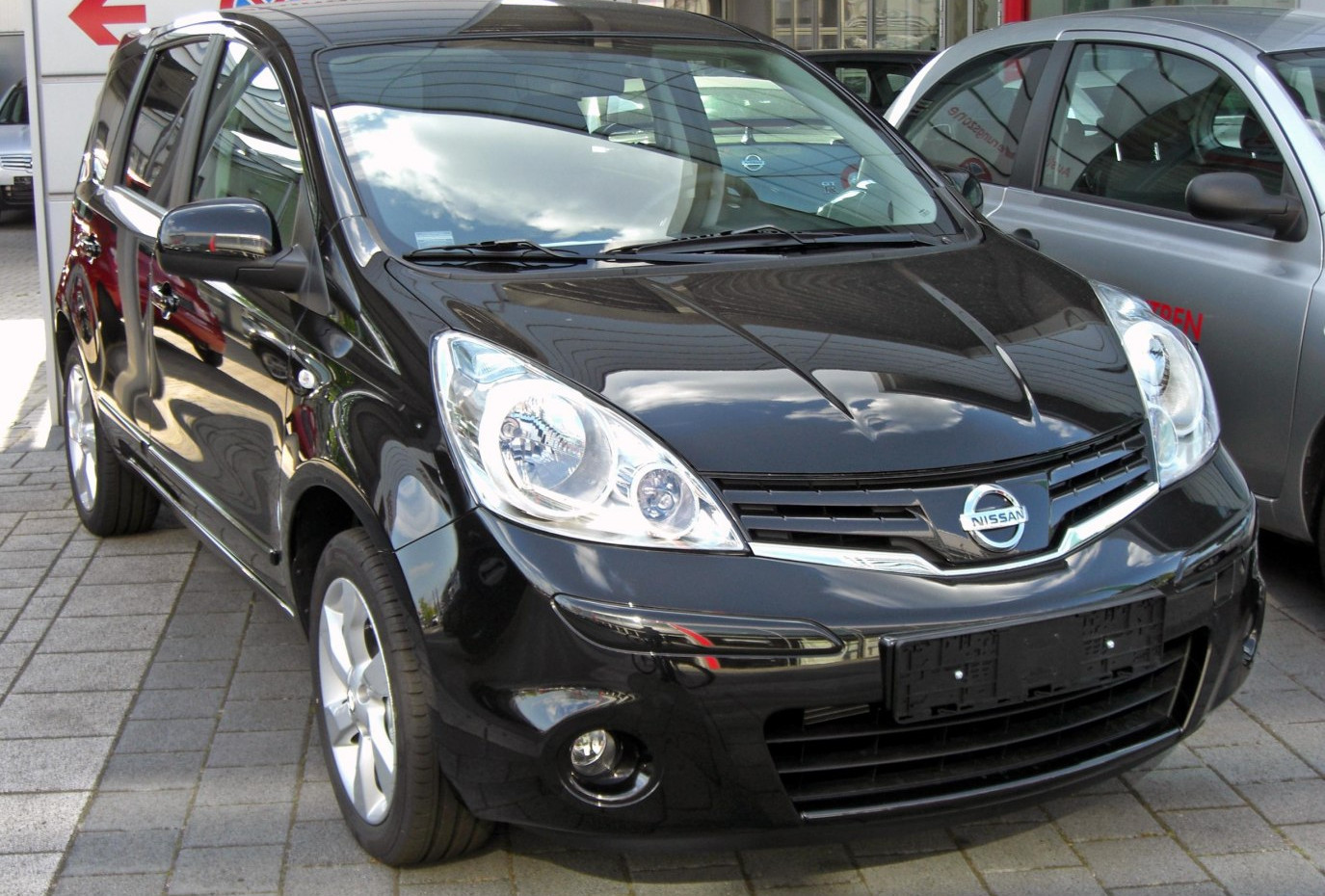
Note
|
| Generation |
Note I (E11, facelift 2010)
|
| Modification (Engine) |
1.6 (110 Hp)
|
| Start of production |
2010 year
|
| End of production |
2012 year
|
| Powertrain Architecture |
Internal Combustion engine
Powertrain architecture classifies the propulsion technology of the vehicle, such as internal combustion, electric (BEV), or hybrid.
|
| Body type |
Hatchback
Body type refers to the structural design and shape of the vehicle (such as Sedan, Hatchback, SUV, or Coupe).
|
| Seats |
5
Seat count specifies the maximum passenger capacity the vehicle is legally approved to transport at once.
|
| Doors |
5
Door count indicates the total number of entry points for passengers and cargo access (e.g., 3-door, 5-door).
|
FAQ
Performance specs
| Fuel consumption (economy) - urban |
8.5 l/100 km
Fuel consumption shows how much fuel the car consumes on average per 100 km. Lower figures represent better fuel economy and lower running costs.
|
|---|---|
| Fuel consumption (economy) - extra urban |
5.5 l/100 km
Fuel consumption shows how much fuel the car consumes on average per 100 km. Lower figures represent better fuel economy and lower running costs.
|
| Fuel consumption (economy) - combined |
6.6 l/100 km
Fuel consumption shows how much fuel the car consumes on average per 100 km. Lower figures represent better fuel economy and lower running costs.
|
| Fuel Type |
Petrol (Gasoline)
Fuel type defines the primary source of energy required by the vehicle’s engine (petrol, diesel, electricity, hybrid, LPG, etc.).
|
| Acceleration 0 - 100 km/h |
10.7 sec
The 0-100 km/h sprint time measures how quickly the vehicle accelerates from a standstill. It is a key indicator of raw performance and responsiveness.
|
| Acceleration 0 - 62 mph |
10.7 sec
The 0-100 km/h sprint time measures how quickly the vehicle accelerates from a standstill. It is a key indicator of raw performance and responsiveness.
|
| Acceleration 0 - 60 mph (Calculated by User) |
10.2 sec
|
| Maximum speed |
183 km/h
Maximum speed represents the upper limit of velocity the vehicle can reach, limited by gear ratios, engine power, and aerodynamic resistance.
|
| Emission standard |
Euro 5
|
| Weight-to-power ratio |
10.1 kg/Hp, 99.4 Hp/tonne
|
| Weight-to-torque ratio |
7.2 kg/Nm, 138.2 Nm/tonne
|
Engine specs
| Power |
110 Hp @ 6000 rpm.
|
|---|---|
| Power per litre |
68.8 Hp/l
Power per litre (specific power) measures the engine power relative to its displacement. A higher value indicates advanced efficiency and engineering quality.
|
| Torque |
153 Nm @ 4400 rpm.
Torque represents the engine’s rotational force, which determines pulling power. High torque ensures responsive acceleration and stronger uphill performance.
|
| Engine layout |
Front, Transverse
Engine layout defines the position and alignment of the engine block. This layout affects the car’s weight distribution, handling, and interior cabin space.
|
| Engine Model Code |
HR16DE
|
| Engine displacement |
1598 cm3
Engine displacement represents the combined volume of all cylinders. It is a direct indicator of engine size and baseline performance potential.
|
| Number of cylinders |
4
Cylinder count represents the number of combustion chambers. More cylinders generally result in smoother operation and a refined engine note.
|
| Engine configuration |
Inline
|
| Number of valves per cylinder |
4
Valves per cylinder control the airflow into and exhaust out of the engine. More valves improve high-RPM breathing and performance.
|
| Fuel injection system |
Multi-port manifold injection
|
| Engine aspiration |
Naturally aspirated engine
Aspiration describes how the engine draws air into its cylinders, distinguishing naturally aspirated setups from turbochargers or superchargers.
|
| Engine oil capacity |
4.6 l
|
| Coolant |
5.6 l
|
Space, Volume and weights
| Kerb Weight |
1107 kg
Curb weight is a key parameter affecting fuel consumption, handling agility, acceleration times, and stopping distances.
|
|---|---|
| Max. weight |
1560 kg
Curb weight is a key parameter affecting fuel consumption, handling agility, acceleration times, and stopping distances.
|
| Max. load |
453 kg
|
| Trunk (boot) space - minimum |
280 l
|
| Trunk (boot) space - maximum |
437 l
|
| Fuel tank capacity |
46 l
|
Dimensions
| Length |
4100 mm
|
|---|---|
| Width |
1690 mm
|
| Height |
1550 mm
|
| Wheelbase |
2600 mm
|
| Minimum turning circle (turning diameter) |
11 m
|
Drivetrain, brakes and suspension specs
| Drivetrain Architecture |
The Internal combustion engine (ICE) drives the front wheels of the vehicle.
Drivetrain type specifies which wheels receive power from the engine. This affects road grip, cornering, and stability on slippery surfaces.
|
|---|---|
| Drive wheel |
Front wheel drive
Drivetrain type specifies which wheels receive power from the engine. This affects road grip, cornering, and stability on slippery surfaces.
|
| Number of gears and type of gearbox |
5 gears, manual transmission
|
| Front suspension |
Independent, type McPherson with coil spring and anti-roll bar
The suspension system absorbs road bumps, providing cabin comfort and keeping tires firmly planted on the road surface.
|
| Rear suspension |
Rigid axle suspension
The suspension system absorbs road bumps, providing cabin comfort and keeping tires firmly planted on the road surface.
|
| Front brakes |
Disc
The brake system is a vital safety component that uses friction to slow down or bring the vehicle to a complete stop.
|
| Rear brakes |
Drum
The brake system is a vital safety component that uses friction to slow down or bring the vehicle to a complete stop.
|
| Assisting systems |
ABS (Anti-lock braking system)
|
| Steering type |
Steering rack and pinion
|
| Power steering |
Electric Steering
|
| Tires size |
175/65 R15; 185/65 R15; 185/55 R16
Tire size specifies the tread width, aspect ratio, and rim diameter, affecting the balance between handling grip and ride comfort.
|
| Wheel rims size |
15; 16
|
Common OBD2 Fault Codes
Similar Models


User Reviews
O
Oliver 95
16 days ago
★★★★★
Perfect size and choice for our small family. Acceleration is punchy and satisfying. Spacious interior and practical cargo capacity. If you are thinking about buying one, go test drive it.
•
L
Leo M.
13 days ago
★★★★☆
Ordered it immediately after a quick test drive. 6.6 l/100 km economy is better than I expected. Comfort is top-notch, great seats. Worth every single penny spent.
•
W
William B.
7 days ago
★★★★★
Switched from a different brand. The 110 Hp @ 6000 rpm. hp feels more than enough for daily driving. The exterior design looks sharp and modern in person. I highly recommend it, won't disappoint.
•
G
George T.
7 months ago
★★★★☆
Mainly using it for my daily commute to work. 6.6 l/100 km efficiency is surprisingly good for this class. The infotainment is fast and lag-free. Worth every single penny spent.
•
C
Charlie 95
28 weeks ago
★★★★★
Perfect size and choice for our small family. Engine performance exceeded my expectations. Spacious interior and practical cargo capacity. Value for money is unmatched, highly recommended.
•