Gmc 2.5 (193 Hp) Automatic
General information
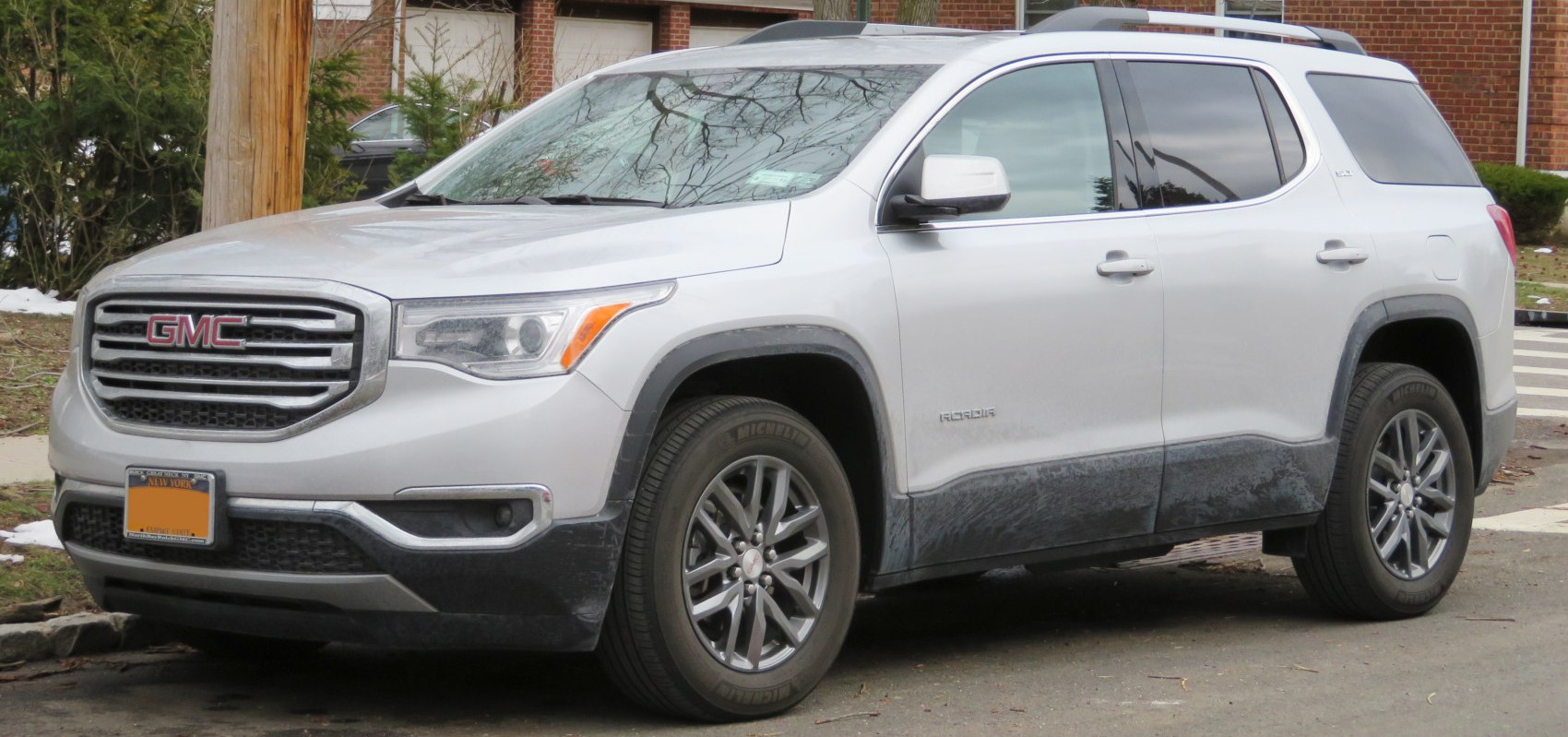
| Power | 193 Hp @ 6300 rpm. |
|---|---|
| Torque | 255 Nm @ 4000 rpm. |
| Brand |
GMC
|
|---|---|
| Model |
Acadia
|
| Generation |
Acadia II
|
| Modification (Engine) |
2.5 (193 Hp) AWD Automatic
|
| Start of production |
2016 year
|
| End of production |
2019 year
|
| Powertrain Architecture |
Internal Combustion engine
Powertrain architecture classifies the propulsion technology of the vehicle, such as internal combustion, electric (BEV), or hybrid.
|
| Body type |
SUV, Crossover
Body type refers to the structural design and shape of the vehicle (such as Sedan, Hatchback, SUV, or Coupe).
|
| Seats |
7
Seat count specifies the maximum passenger capacity the vehicle is legally approved to transport at once.
|
| Doors |
5
Door count indicates the total number of entry points for passengers and cargo access (e.g., 3-door, 5-door).
|
FAQ
Performance specs
| Fuel consumption (economy) - urban |
11.2 l/100 km
Fuel consumption shows how much fuel the car consumes on average per 100 km. Lower figures represent better fuel economy and lower running costs.
|
|---|---|
| Fuel consumption (economy) - extra urban |
9.4 l/100 km
Fuel consumption shows how much fuel the car consumes on average per 100 km. Lower figures represent better fuel economy and lower running costs.
|
| Fuel Type |
Petrol (Gasoline)
Fuel type defines the primary source of energy required by the vehicle’s engine (petrol, diesel, electricity, hybrid, LPG, etc.).
|
Engine specs
| Power |
193 Hp @ 6300 rpm.
|
|---|---|
| Power per litre |
78.6 Hp/l
Power per litre (specific power) measures the engine power relative to its displacement. A higher value indicates advanced efficiency and engineering quality.
|
| Torque |
255 Nm @ 4000 rpm.
Torque represents the engine’s rotational force, which determines pulling power. High torque ensures responsive acceleration and stronger uphill performance.
|
| Engine layout |
Front, Transverse
Engine layout defines the position and alignment of the engine block. This layout affects the car’s weight distribution, handling, and interior cabin space.
|
| Engine Model Code |
LCV
|
| Engine displacement |
2457 cm3
Engine displacement represents the combined volume of all cylinders. It is a direct indicator of engine size and baseline performance potential.
|
| Number of cylinders |
4
Cylinder count represents the number of combustion chambers. More cylinders generally result in smoother operation and a refined engine note.
|
| Engine configuration |
Inline
|
| Cylinder bore |
88 mm
|
| Piston stroke |
101 mm
|
| Number of valves per cylinder |
4
Valves per cylinder control the airflow into and exhaust out of the engine. More valves improve high-RPM breathing and performance.
|
| Fuel injection system |
Direct injection
|
| Engine aspiration |
Naturally aspirated engine
Aspiration describes how the engine draws air into its cylinders, distinguishing naturally aspirated setups from turbochargers or superchargers.
|
| Valvetrain |
DOHC, VVT
|
| Engine oil capacity |
5.7 l
|
| Coolant |
9.2 l
|
Space, Volume and weights
| Trunk (boot) space - minimum |
362 l
|
|---|---|
| Trunk (boot) space - maximum |
2237 l
|
| Fuel tank capacity |
83 l
|
Dimensions
| Length |
4917 mm
|
|---|---|
| Width |
1915 mm
|
| Height |
1745 mm
|
| Wheelbase |
2858 mm
|
| Front track |
1638 mm
|
| Rear / Back Track |
1638 mm
|
| Ride height (ground clearance) |
182 mm
|
| Minimum turning circle (turning diameter) |
11.8 m
|
Drivetrain, brakes and suspension specs
| Drive wheel |
All wheel drive (4x4)
Drivetrain type specifies which wheels receive power from the engine. This affects road grip, cornering, and stability on slippery surfaces.
|
|---|---|
| Number of gears and type of gearbox |
6 gears, automatic transmission Hydra-Matic
|
| Front suspension |
Independent, type McPherson with coil spring and anti-roll bar
The suspension system absorbs road bumps, providing cabin comfort and keeping tires firmly planted on the road surface.
|
| Rear suspension |
Independent multi-link suspension
The suspension system absorbs road bumps, providing cabin comfort and keeping tires firmly planted on the road surface.
|
| Front brakes |
Ventilated discs
The brake system is a vital safety component that uses friction to slow down or bring the vehicle to a complete stop.
|
| Rear brakes |
Ventilated discs
The brake system is a vital safety component that uses friction to slow down or bring the vehicle to a complete stop.
|
| Assisting systems |
ABS (Anti-lock braking system)
|
| Steering type |
Steering rack and pinion
|
| Power steering |
Electric Steering
|
| Tires size |
245/65 R17; 235/65 R18; 235/55 R20
Tire size specifies the tread width, aspect ratio, and rim diameter, affecting the balance between handling grip and ride comfort.
|
| Wheel rims size |
17; 18; 20
|
Common OBD2 Fault Codes
Similar Models

User Reviews
O
Oscar 90
22 days ago
★★★★★
Got this car a few months ago. The engine is snappy, great response time. The exterior design looks sharp and modern in person. No regrets so far, extremely happy with my purchase.
•
J
James M.
16 months ago
★★★★☆
Mainly using it for my daily commute to work. The 193 Hp @ 6300 rpm. hp feels powerful on the road. Sound insulation is great, very quiet cabin at high speeds. If you're undecided, just go for it.
•
G
George V.
2 months ago
★★★★★
Bought a used model in great condition last year. N/A efficiency is surprisingly good for this class. Interior quality is premium for this class. If you are thinking about buying one, go test drive it.
•
H
Harry M.
19 months ago
★★★★★
Finally got the keys today. The engine is snappy, great response time. Spacious interior and practical cargo capacity. Worth every single penny spent.
•
J
Jack A.
16 weeks ago
★★★★★
Finally got the keys today. Acceleration is punchy and satisfying. The infotainment is fast and lag-free. If you're undecided, just go for it.
•
H
Harry 84
21 months ago
★★★★★
Does anyone experience any rattles or squeaks over time?
•